

 English
 русский
 عربى
عربى
 +86-15867355556
Constructed with a spiral corrugation design, this tube boasts remarkable resistance to corrosion, p...

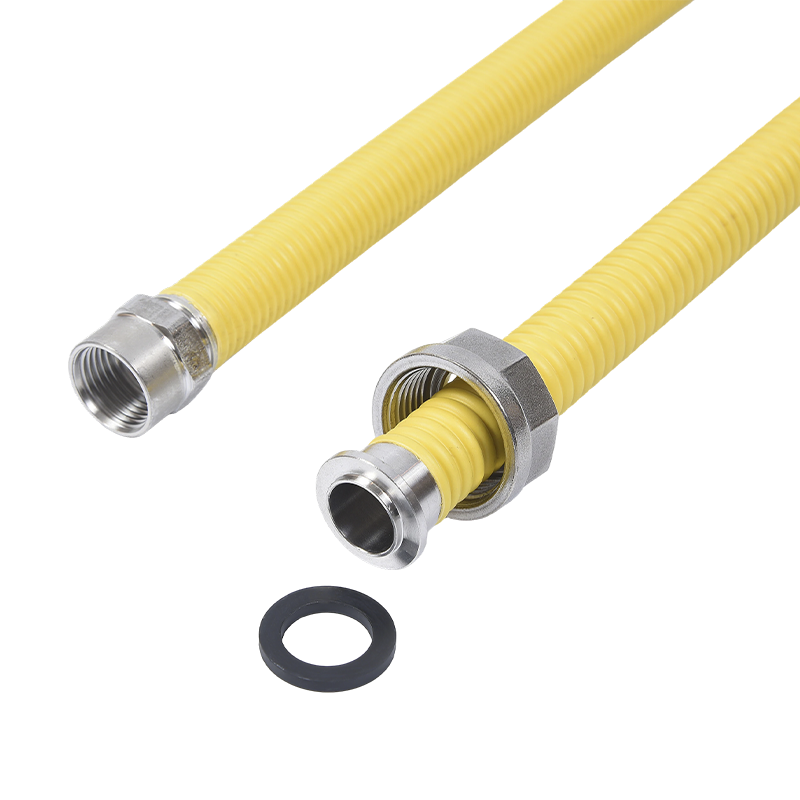
Constructed with a spiral corrugation design, this tube boasts remarkable resistance to corrosion, p...

As China Corrugated Stainless Steel Gas Pipe Factory and Flexible Stainless Steel Gas Pipe Manufacturers, Yuyao Boli Utilities Sometimes Company was founded in 2002 and is located in the Wu Ma Industrial Park of Yuyao City, Zhejiang Province, a relatively developed part of the industrial chain. The company specializes in producing stainless steel pipe corrugated pipe, gas pipe, heating pipe and other stainless steel pipe sanitary ware series, can also be produced according to customer requirements OEM processing, The factory covers an area of 17 acres, the company has 25 stainless steel corrugated pipe production lines, heat treatment and light reflame, cold beam manufacturing, steel belt division, laser automatic welding or marking, and ultrasonic cleaning equipment, and a complete team of strong research and development (sales). Promoting the steady development of the company's business, the company, based on the concept of "survival with quality, casting quality with heart," adheres to stable quality, reasonable prices and sound after-sales service, always provides good products and technical support to customers, continuously satisfying the needs of the vast majority of customers. The company employs more than 100 people, 5 senior engineers, has a construction area of more than 17,000 square meters, has more than 100 numerical cutting lathes, more than 20 polishing machines, several automatic welding machines, seamstresses, several automated drilling machines, five assembly lines, and so on. The product has formed a complete production management system from the bottoming--cleaning--polishing--assembly--inspection--out of the warehouse. At present, the leading series is produced, and product sales have covered many first- and second-line brands at home and abroad, and foreign trade orders have covered several countries and regions such as the Middle East and Europe. We have a good quality management system, better serve our customers, and contribute to the purification of water. Many customers are welcome to visit the company's laboratory.
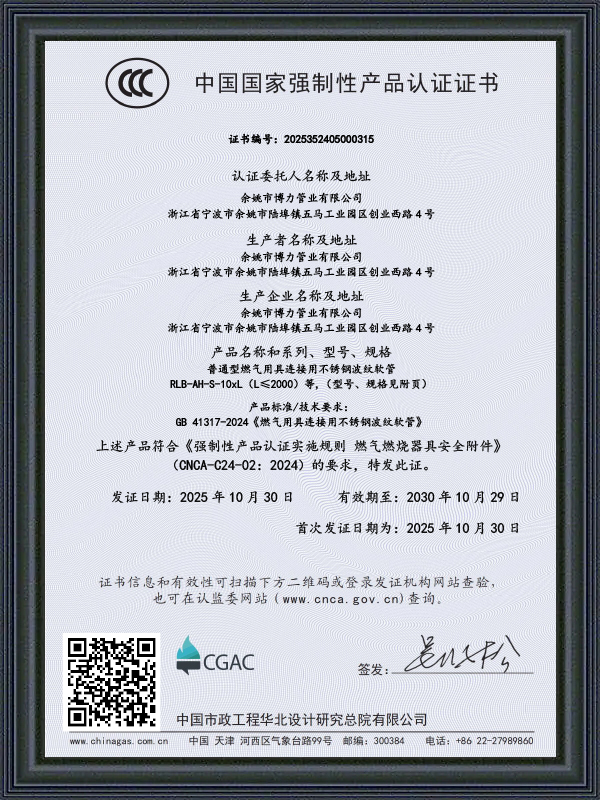
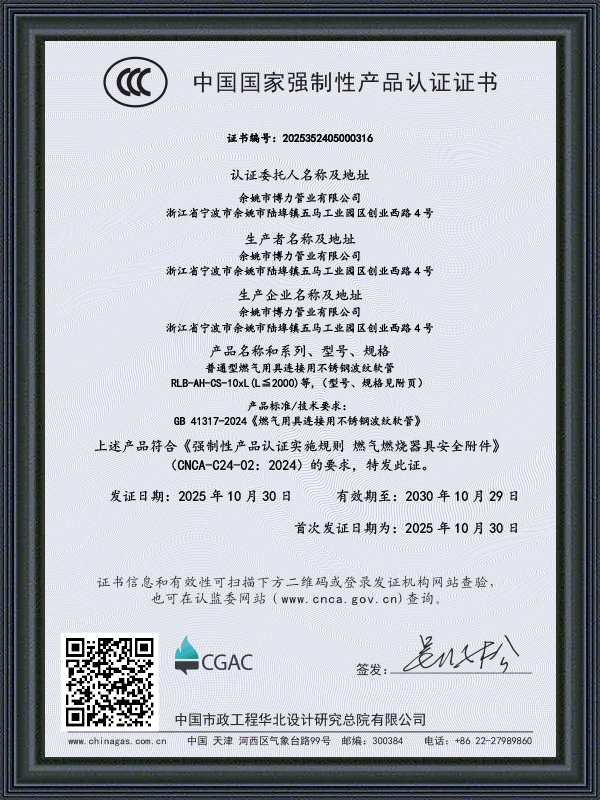
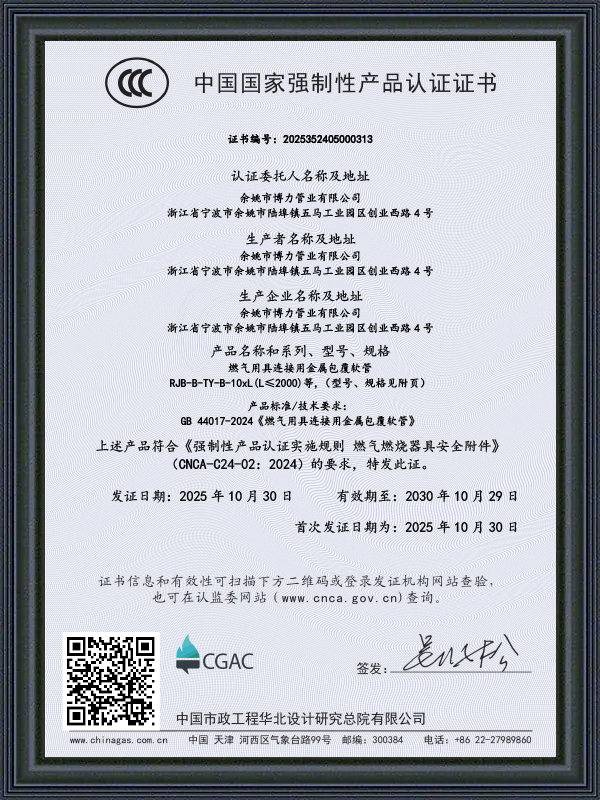
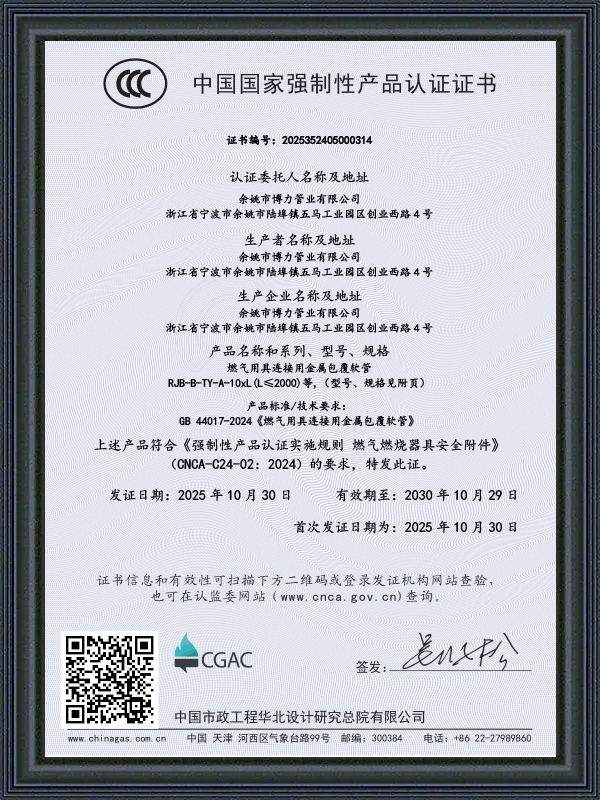
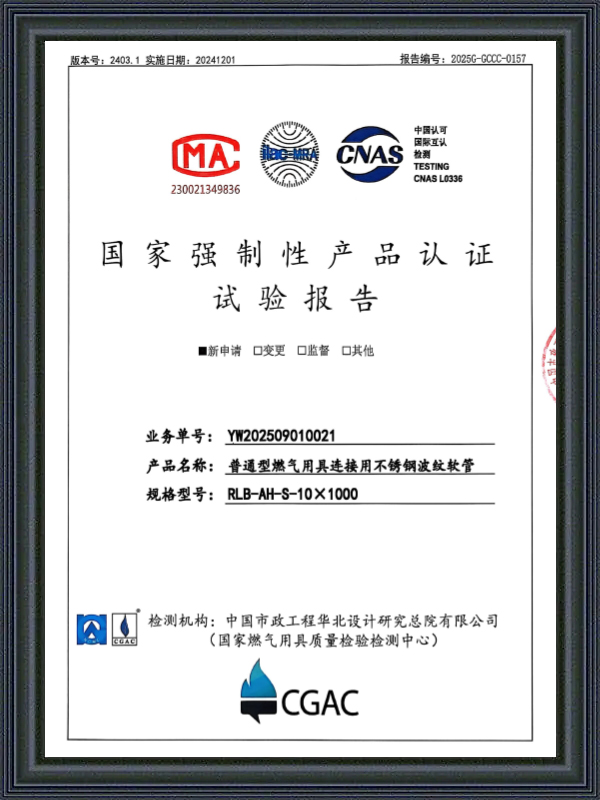
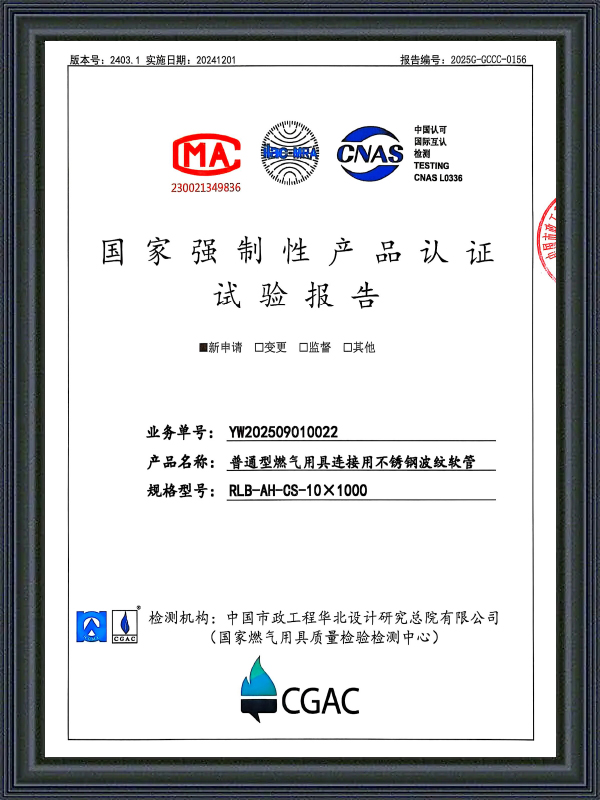
Two months after a batch of 304 stainless steel bellows were installed in a coastal hotel, small brown spots appeared along the weld seams. The base metal still looked clean. The supplier insisted the material was genuine 304, and a labora...

Corrugated stainless steel tubing, commonly called CSST pipe, has become a trusted choice for gas installations in modern buildings. As a manufacturer of stainless steel gas pipes and flexible connectors, we often see contractors and proje...
A procurement engineer for a residential project was asked to approve a gas hose labeled simply "stainless steel." The supplier quoted a good price and promised a corrugated tube. But when the material certificate arrived, it showed no gra...
A building contractor unloads a batch of stainless steel corrugated pipes and notices orange-brown specks near the cut ends. A homeowner scrubs a newly installed kitchen sink and watches reddish stains appear on the drain flange. Both have...
In the gas distribution sector, system integrity is paramount due to the volatile nature of fuel gases such as natural gas and liquefied petroleum gas. Unlike piping systems carrying water or low-pressure fluids, gas delivery networks operate under strict safety thresholds where even minor microscopic anomalies can lead to hazardous accumulations. Corrugated Stainless Steel Gas Pipe has become a primary alternative to rigid black iron or copper piping because of its flexible geometry and reduced mechanical joint requirements. To maintain safety compliance, reputable manufacturing facilities, such as Yuyao Boli Pipe Industry Ltd., integrate comprehensive testing protocols directly into their automated production lines, ensuring each finished spool or segment underwent strict verification before shipping to global markets.
International and national standards governing fuel gas piping systems, such as ANSI LC 1/CSA 6.26, dictate stringent quality control measures for flexible gas piping. Statistical batch testing, which involves checking only a small percentage of a production run, is legally and technically insufficient for gas applications. Manufacturers utilize dedicated infrastructure, including specialized steel belt division, automated laser welding, and bright annealing heat treatment, to establish uniform wall profiles across all 25 production lines. However, because the corrugation process involves intensive mechanical deformation of the steel substrate, each individual length of Corrugated Stainless Steel Gas Pipe must be verified for structural completeness to guarantee that no microscopic stress fractures, pinholes, or weld separations occurred during forming.
The verification process begins immediately after the longitudinal laser welding and corrugation phases. Advanced manufacturing systems send the continuous corrugated tube through inline acoustic wave or ultrasonic scanning blocks. These sensors pass high-frequency sound waves through the metallic matrix to detect internal discontinuities, wall thickness variations, or structural shifts that the naked eye cannot see. By running this inspection prior to the final heat treatment and bright annealing stages, the automated system flags any physical variance in the weld seam, allowing operators to isolate defective material before it moves further along the assembly line.
Following the ultrasonic scanning and subsequent bright annealing processes, which stabilize the metallurgical structure of the stainless steel, the pipe undergoes pneumatic pressure testing. The corrugated pipe is sealed at both ends using specialized pneumatic clamping fixtures connected to high-precision pressure transducers. The internal volume of the pipe is pressurized with dry air or inert nitrogen gas to a level significantly exceeding standard residential or commercial operating pressures. The automated testing software monitors the internal pressure over a calculated dwell time using differential pressure sensors capable of detecting minuscule pressure drops, verifying the absence of leaks through the micro-porosities of the metal wall.
Manufacturers implement multiple layers of non-destructive testing to verify the structural integrity of the tubing. The following table contrasts the primary mechanical testing methods utilized on the production floor to confirm that the gas pipe is sealed.
| Testing Method | Target Area of Detection | Operational Stage | Primary Detection Principle |
| Ultrasonic Testing (UT) | Internal weld seam uniformity and sub-surface material micro-cracks | Post-laser welding and corrugation formation | High-frequency sound wave reflection patterns |
| Pneumatic Pressure Decay | Through-wall pinholes, macro-porosity, and terminal seal reliability | Post-heat treatment and cleaning phases | Differential internal pressure monitoring over time |
| Mass Spectrometer Helium Leak Testing | Microscopic leak paths at the atomic level down to nominal flow limits | Final quality control before packaging | Trace gas detection inside a vacuum chamber |
For high-consequence gas delivery environments, standard pneumatic decay testing is supplemented by helium mass spectrometry, which offers a highly sensitive method for leak detection. During this procedure, the Corrugated Stainless Steel Gas Pipe is placed within an airtight vacuum chamber while the interior of the pipe is charged with helium gas. Because helium atoms are exceptionally small, they easily pass through any microscopic structural paths that might contain high-pressure gas over time. Sniffer probes or mass spectrometer sensors within the surrounding vacuum chamber analyze the atmosphere for the presence of helium molecules, ensuring that even sub-microscopic leak paths are identified and isolated from the final inventory.
Once a segment of flexible gas pipe successfully completes the required leak testing phases, it is routed through an ultrasonic cleaning system to remove any surface scale, moisture, or particulate residues accumulated during mechanical handling. Maintaining an oil-free and dry interior is necessary to prevent chemical reactions with fuel gas additives down the line. Finally, the pipe passes an inline laser automatic marking station where a unique serial number, production batch code, pressure rating, and compliance stamps are permanently etched onto the exterior jacket. This marking system establishes full technical traceability, confirming to field inspectors and mechanical engineers that the individual spool was tested at the factory and cleared for field installation.
Q: How does the integration of 25 production lines impact the quality consistency of your Corrugated Stainless Steel Gas Pipe?
A: Operating 25 dedicated production lines allows for specialized allocation of machinery to specific wall thicknesses and diameters. This high level of specialization ensures that automated laser welding and corrugation parameters remain stable and optimized, preventing the dimensional variations that can compromise gas containment safety.
Q: What role does the bright annealing heat treatment play in the safety performance of flexible gas pipes?
A: The bright annealing, or light reflame process, treats the metal after it has been mechanically corrugated. This metallurgical step eliminates internal micro-stresses caused by the shaping process, restoring ductility so the gas pipe can be bent around building structures during installation without developing stress corrosion cracking or material fatigue.
Q: Why is ultrasonic cleaning specified for the Corrugated Stainless Steel Gas Pipe before it leaves the factory?
A: Gas distribution systems require completely clean internal environments to prevent fuel gas additives or impurities from reacting with the pipe wall. The ultrasonic cleaning equipment uses high-frequency sound waves in a liquid medium to dislodge all traces of manufacturing oils, lubricants, and microscopic metal shavings from deep within the corrugation folds.
Q: Can the technical design of the gas piping be modified to fit specific international standards for OEM clients?
A: Yes, supported by a complete research and development team and on-site steel belt division equipment, the manufacturing processes can be calibrated to meet specific technical drawings, pressure ratings, and material compositions required by global OEM buyers and regional gas utility regulations.
Q: How does the laser automatic marking system assist field installers and inspectors handling the gas pipe?
A: The inline laser automatic marking equipment permanently etches critical technical data directly onto the pipe surface, including pressure ratings, batch numbers, and compliance certifications. This high-definition marking eliminates tracking errors and provides clear verification for safety inspectors during on-site code evaluations.
Q: How does the cold beam manufacturing process affect the mechanical durability of your flexible gas lines?
A: The cold beam manufacturing setup ensures precise geometric alignment of the stainless steel strip prior to the welding stage. By maintaining tight structural tolerances before the corrugated profile is introduced, the pipe achieves uniform wall thickness, which results in predictable burst pressure resistance across the entire length of the gas line.

Copyright © Yuyao Boli Pipe Industry Ltd. All Rights Reserved

OEM/ODM Corrugated/Flexible Stainless Steel Gas Pipe Factory