

 English
 русский
 عربى
عربى
 +86-15867355556
Key Highlights, Enhanced Smart Experience·Real-time Smart Digital Display: A built-in high-definitio...

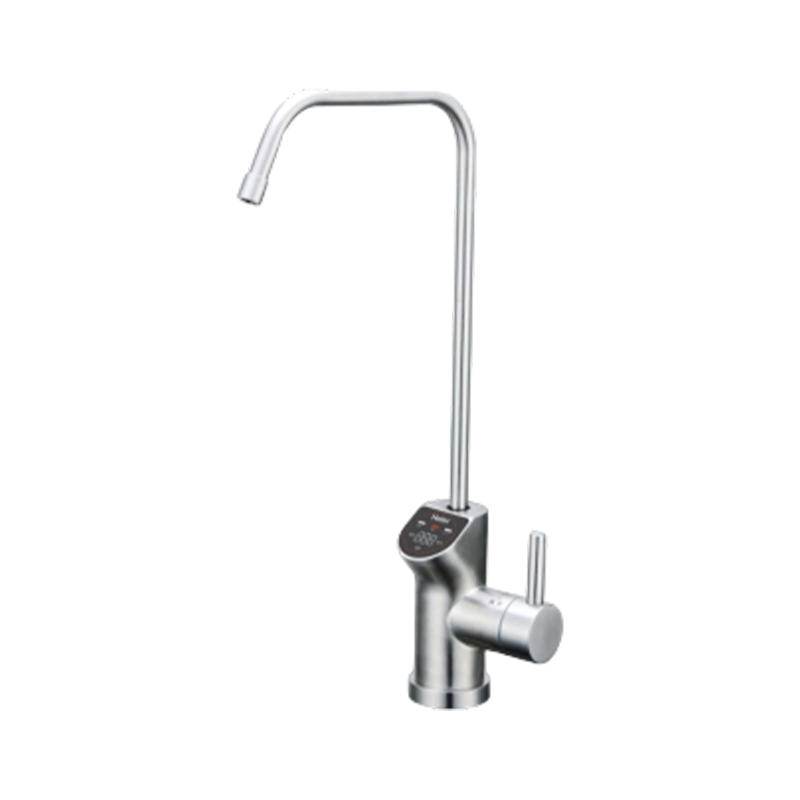
Key Highlights, Enhanced Smart Experience·Real-time Smart Digital Display: A built-in high-definitio...

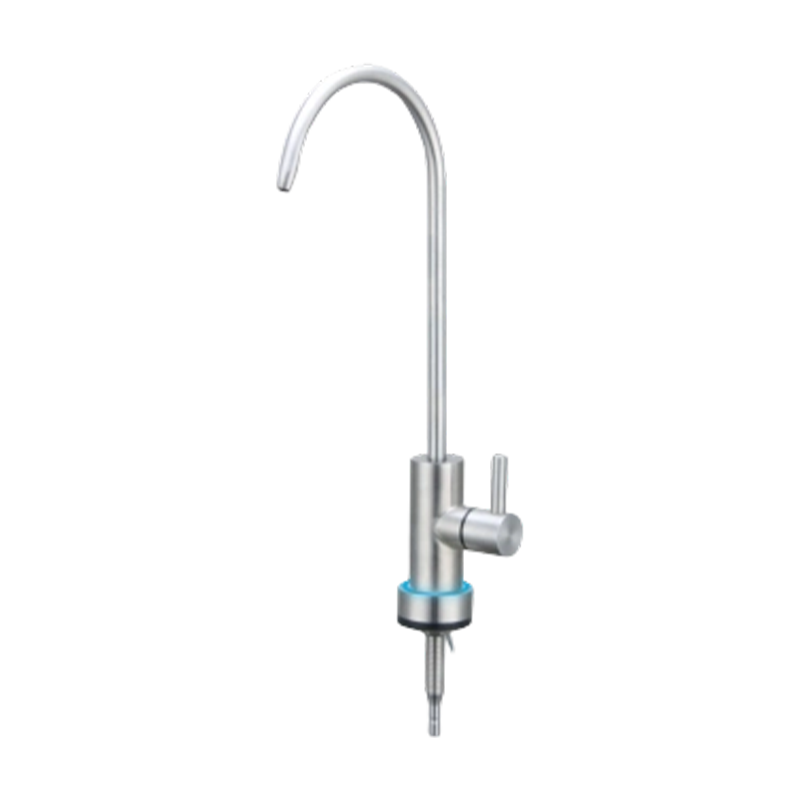
The 304 stainless steel smart light display faucet is an innovative product combining modern smart t...
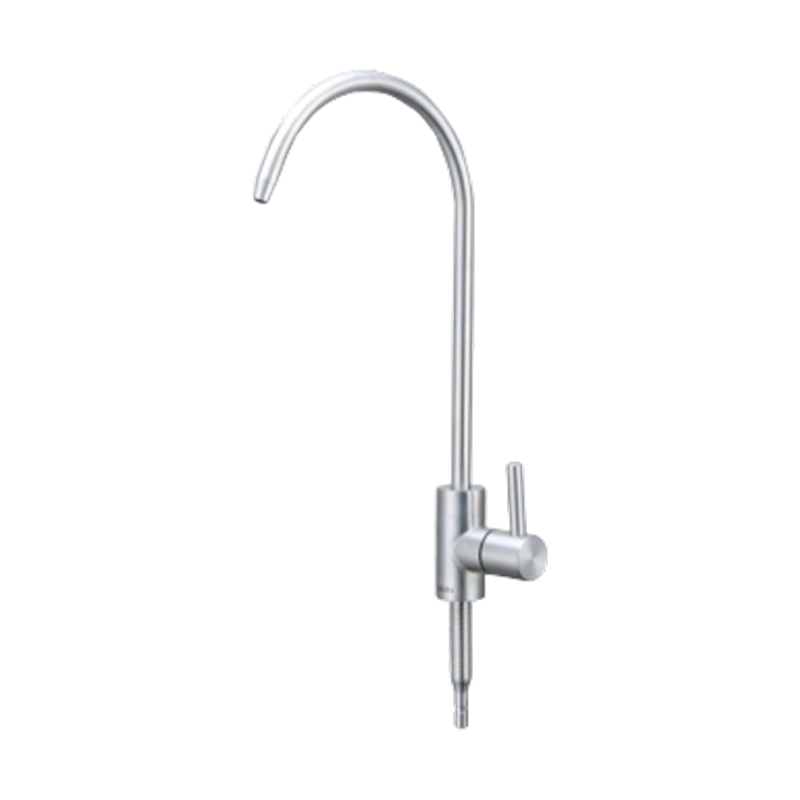
Core Advantages: Premium 304 Stainless Steel MaterialThe main body of this product is made of food-g...
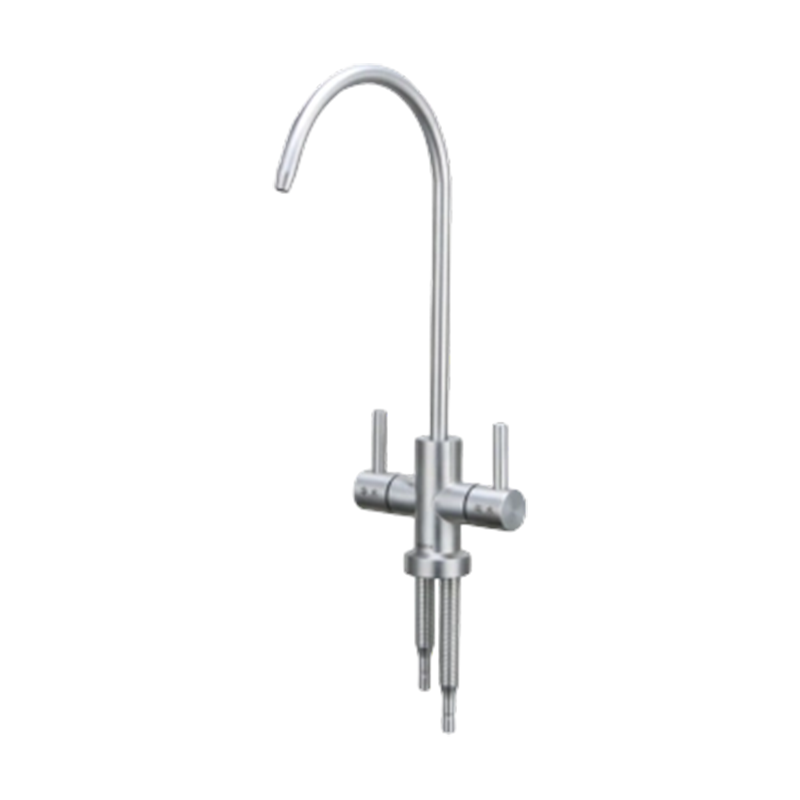
This 304 Stainless Steel Double Faucet is made of high-quality 304 stainless steel, offering excelle...

The BY-CKO1 Black 304 Stainless Steel Smart Touch Faucet is a modern and high-end bathroom accessory...
As China Stainless Steel Faucet Manufacturers and Stainless Steel Faucet Factory, Yuyao Boli Utilities Sometimes Company was founded in 2002 and is located in the Wu Ma Industrial Park of Yuyao City, Zhejiang Province, a relatively developed part of the industrial chain. The company specializes in producing stainless steel pipe corrugated pipe, gas pipe, heating pipe and other stainless steel pipe sanitary ware series, can also be produced according to customer requirements OEM processing, The factory covers an area of 17 acres, the company has 25 stainless steel corrugated pipe production lines, heat treatment and light reflame, cold beam manufacturing, steel belt division, laser automatic welding or marking, and ultrasonic cleaning equipment, and a complete team of strong research and development (sales). Promoting the steady development of the company's business, the company, based on the concept of "survival with quality, casting quality with heart," adheres to stable quality, reasonable prices and sound after-sales service, always provides good products and technical support to customers, continuously satisfying the needs of the vast majority of customers. The company employs more than 100 people, 5 senior engineers, has a construction area of more than 17,000 square meters, has more than 100 numerical cutting lathes, more than 20 polishing machines, several automatic welding machines, seamstresses, several automated drilling machines, five assembly lines, and so on. The product has formed a complete production management system from the bottoming--cleaning--polishing--assembly--inspection--out of the warehouse. At present, the leading series is produced, and product sales have covered many first- and second-line brands at home and abroad, and foreign trade orders have covered several countries and regions such as the Middle East and Europe. We have a good quality management system, better serve our customers, and contribute to the purification of water. Many customers are welcome to visit the company's laboratory.
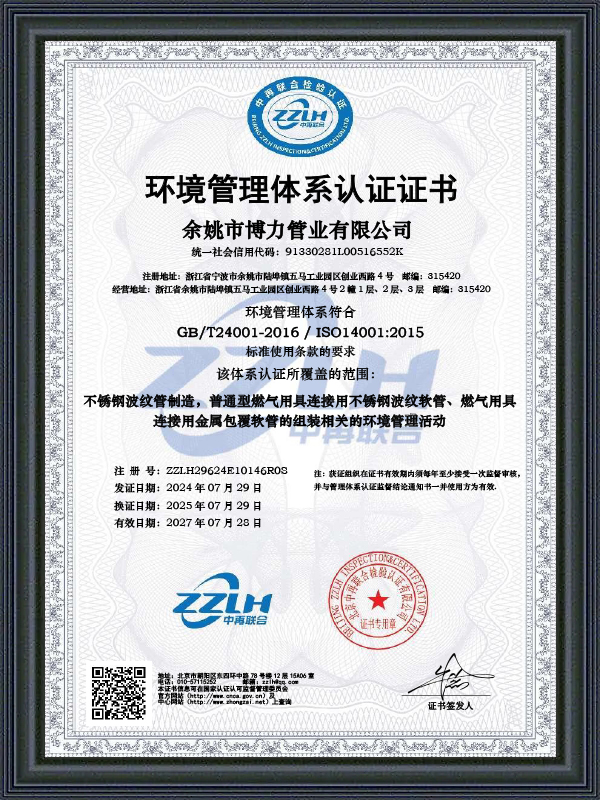
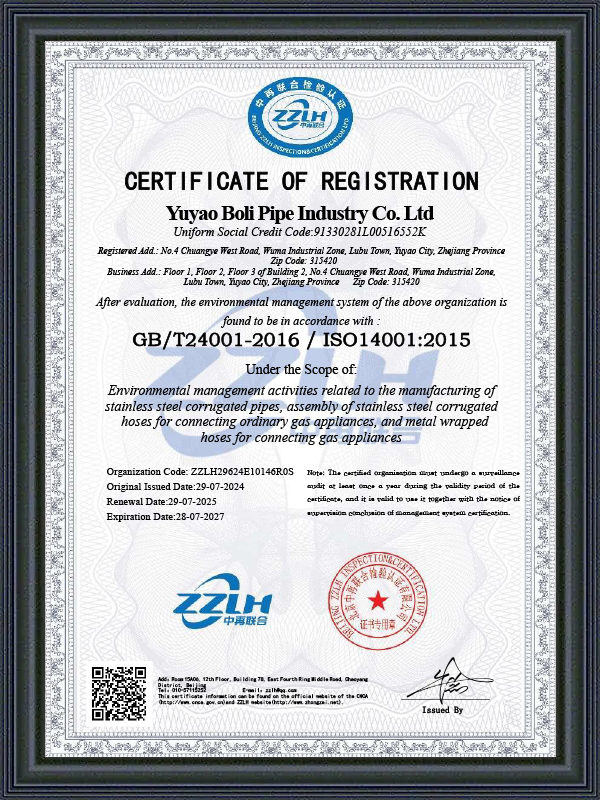
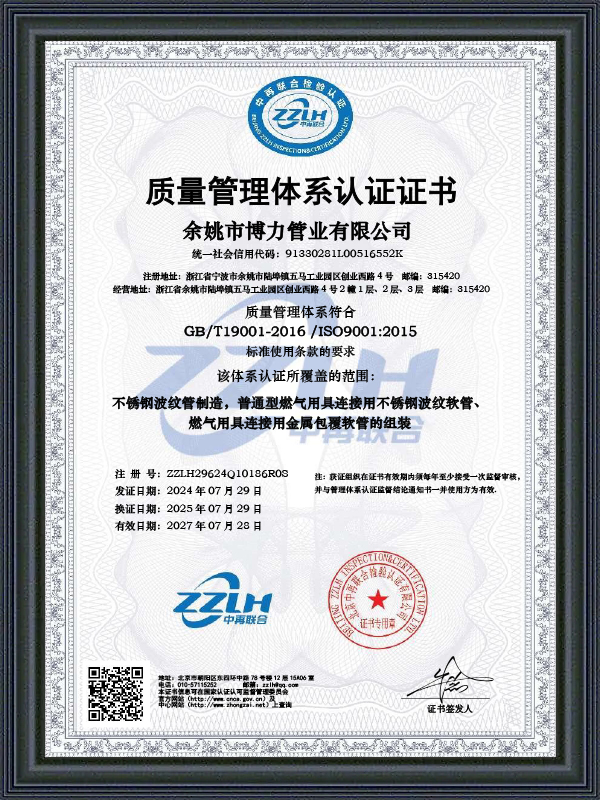
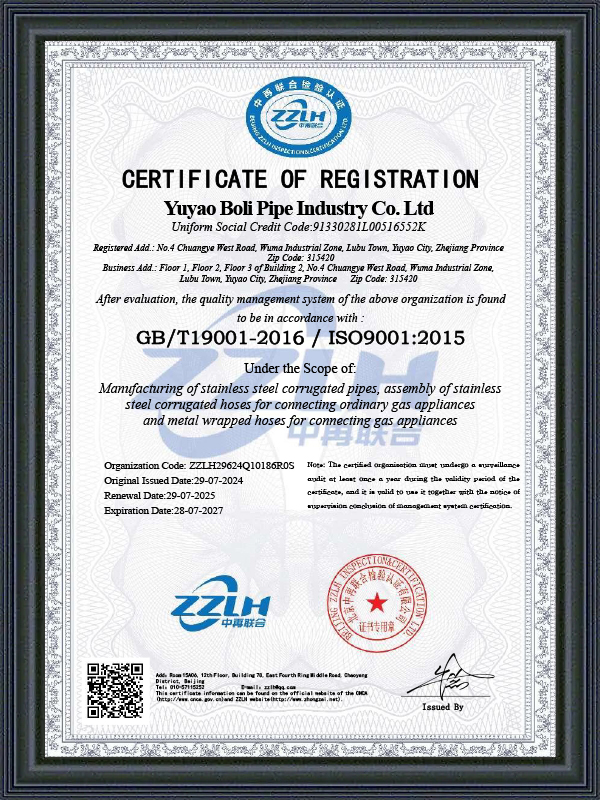
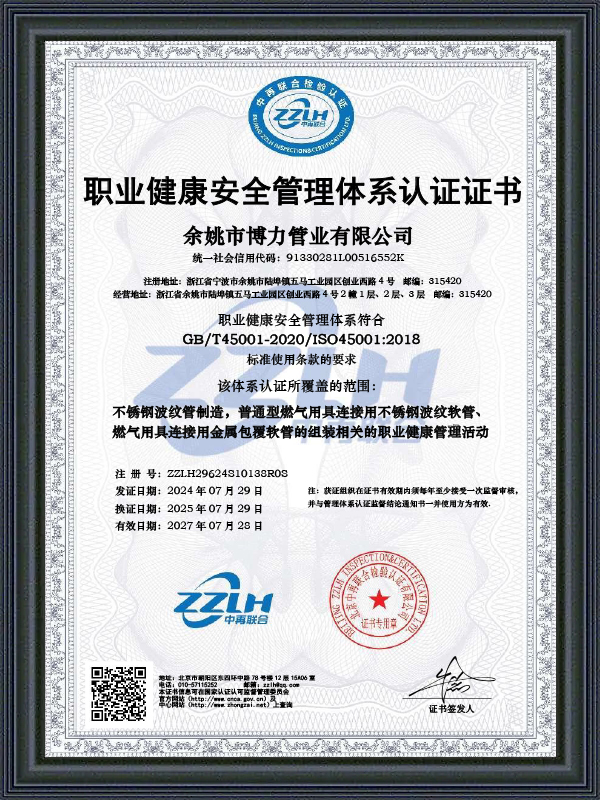
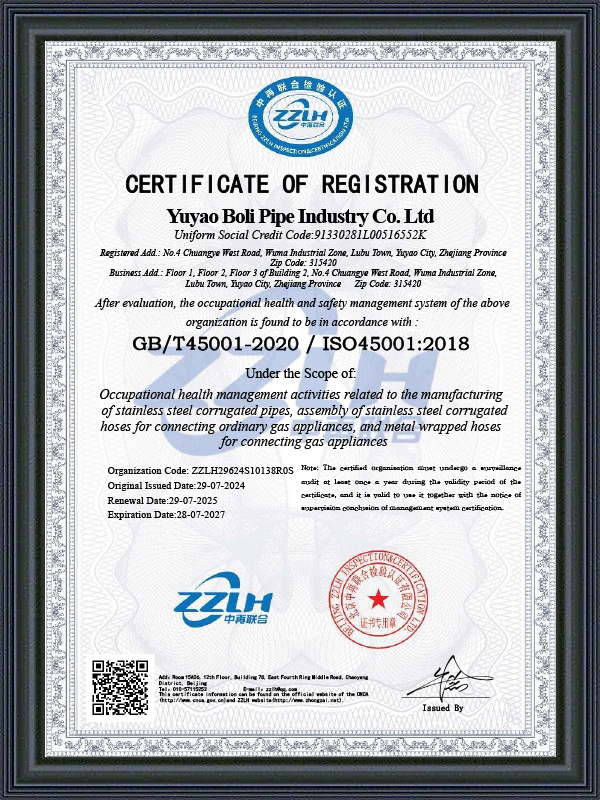
If you search for "CSST certification," you will see two very different results. One is the Certified Site Surveillance Technician credential used in asbestos and hazardous material work. The other relates to corrugated stainless steel tub...

For more than two decades, Yuyao Boli Pipe Industry has designed and manufactured stainless steel corrugated tubing for gas and plumbing applications around the world. During that time, corrugated stainless steel tubing, commonly abbreviat...
When a specification sheet for a stainless steel corrugated tube lists "1.4307" and you need to know whether that grade is a safe choice for gas or water service, the short answer is yes, provided the supplier manufactured the part to an a...
When you source stainless steel pipe for gas or water connections, corrosion resistance is not an optional property. The wrong grade or an untreated surface can turn into a leak, a blocked line, or a failed inspection within a few years. T...
In the global sanitary ware and plumbing manufacturing sectors, the production methodology of a faucet body directly dictates its structural durability, chemical stability, and operational lifespan. While brass casting and welded tube assemblies have traditionally filled high-volume market segments, investment casting stainless steel faucet bodies represent a major category focused on material purity and mechanical longevity. Manufacturing facilities, such as Yuyao Boli Pipe Industry Ltd.—which leverage advanced processing technologies across 25 production lines including steel belt division, laser automatic welding, and bright annealing—rely on rigorous metallurgical standards to evaluate how varying body constructions perform under continuous fluid pressure and strict sanitary regulations.
Investment casting, often referred to as lost-wax casting, involves injecting wax into a precision-engineered metal die to create a pattern, coating the pattern with a ceramic shell, melting the wax away, and pouring molten stainless steel into the remaining cavity. For a Stainless Steel Faucet body, this process yields a single, homogenous metallic structure with no internal seams, joints, or localized weld zones. By avoiding the joining of separate components, investment-cast bodies eliminate structural variations within the metal walls. This method permits complex internal fluid paths and variable wall thicknesses to be formed simultaneously, ensuring that areas subject to higher water velocity or pressure stress are adequately reinforced during the initial pouring phase without adding external material joints.
Welded faucet bodies are typically constructed by cutting standard stainless steel tubes, forming the required bends using cold manufacturing techniques, and joining the components via automated laser welding or TIG welding processes. While this method leverages highly efficient production setups similar to corrugated pipe manufacturing lines, it introduces longitudinal and circumferential weld seams along the fluid channel. Even when processed through specialized heat treatment and bright annealing (light reflame) lines to redistribute internal stresses, the heat-affected zone surrounding a weld seam possesses a slightly altered crystalline grain structure compared to the base metal. Over extended lifecycles involving thermal cycling from hot and cold water alternating flows, these seam interfaces can become vulnerable to localized stress corrosion cracking if the water chemistry contains elevated chloride levels.
Traditional brass faucet bodies are produced through sand casting or hot forging using copper-zinc alloys. To improve the machinability of brass during threading and polishing operations, standard brass formulations historically included small percentages of lead. When exposed to soft or acidic drinking water, this lead can gradually leach from the inner walls of the faucet body into the potable water stream, presenting compliance challenges under strict modern drinking water standards like NSF/ANSI 61. Conversely, investment casting stainless steel utilizes high-grade alloys, such as SUS304 or SUS316L, which are inherently lead-free. The chemical stability of the chromium-rich oxide passive film on stainless steel ensures that the material does not degrade or leach heavy metals into the water supply, fulfilling sanitary ware requirements without the need for internal chemical barriers or plating layers.
To evaluate how these three manufacturing approaches compare across essential industrial parameters, the table below provides a structural and operational overview of each faucet body category.
| Evaluation Parameter | Investment Casting Stainless Steel | Welded Stainless Steel Assembly | Cast or Forged Brass Alloy |
| Structural Boundary | Single-piece homogenous casting; zero seams | Multi-piece joined assembly; contains weld seams | Single-piece cast or forged alloy structure |
| Lead Content Risk | Zero; inherently lead-free alloy matrix | Zero; utilizes standard lead-free tubing stock | Variable; requires strict alloy control to prevent leaching |
| Internal Geometry Freedom | High; ceramic cores create complex smooth fluid channels | Restricted to standard tubular dimensions and profiles | Moderate to high depending on core sand stability |
| Corrosion Resistance Mechanism | Continuous internal chromium oxide passive film | Passive layer present but altered at weld interfaces | Requires external chrome or nickel protective plating |
| Surface Decontamination | Compatible with intensive ultrasonic cleaning lines | Requires internal cleaning to remove welding oxides | Requires chemical washing to remove casting sand residues |
The internal smoothness of a faucet body affects both the hydraulic flow profile and the rate at which biofilm and mineral scale accumulate inside the plumbing fixture. Investment casting utilizing fine ceramic stucco yields an internal surface with a predictable, uniform roughness profile that can be further refined through post-cast chemical processing. Welded bodies feature a smooth internal draw from the original tube stock, but the internal weld bead creates a raised disruption along the entire seam line. This microscopic ridge alters the localized flow dynamics, causing minor turbulence and creating a catchment zone where particulate matter, calcium carbonate scale, and bacterial colonies can settle. Brass castings can suffer from internal sand burn-in or porosity, which leaves a rougher interior texture that catches particles more readily than cast stainless steel surfaces.
Following the primary forming phase, each faucet body type requires specific finishing steps to prepare the component for consumer integration. Investment-cast stainless steel bodies undergo precision machining of connection threads, followed by ultrasonic cleaning to ensure the removal of all particulate matter and industrial residues. Because the stainless steel material is uniform throughout, the exterior can be satin-brushed or mirror-polished directly without requiring electroplating. Brass bodies, by contrast, must undergo multi-layer copper, nickel, and chrome electroplating to prevent zinc stripping and aesthetic tarnishing. If this external plating layer chips or wears away over time due to abrasive cleaners, the underlying brass matrix becomes exposed to atmospheric oxidation, leading to localized corrosion that does not occur with a solid investment-cast stainless steel body.
Q: How does your complete research and development team assist OEM clients in developing custom Stainless Steel Faucet designs?
A: The on-site research and development team works closely with OEM partners to translate technical drawings and water-saving requirements into functional faucet profiles. Backed by dedicated steel belt division and cold manufacturing capabilities, the engineering team adjusts wall configurations and internal flow dynamics to ensure the custom faucet designs comply with localized water pressure and plumbing regulations.
Q: What processing equipment ensures that the internal channels of your stainless steel faucets are completely free of manufacturing lubricants?
A: All machined faucet components pass through specialized industrial ultrasonic cleaning equipment prior to final assembly. This process uses acoustic cavitation to generate millions of microscopic bubbles that thoroughly flush out machining oils, metal debris, and grinding compounds from the deep internal water channels, delivering a sanitary finished product safe for drinking water systems.
Q: Why is laser automatic marking chosen over chemical etching for branding and labeling your stainless steel faucets?
A: Laser automatic marking equipment permanently alters the surface appearance of the stainless steel using a concentrated light beam, avoiding the use of corrosive chemical acids. This non-contact labeling methodology creates high-contrast brand logos, model identification codes, and hot/cold water indicators that resist wear, scratching, and household cleaning chemicals over years of service.
Q: How does the factory's 17-acre manufacturing footprint support high-volume international plumbing and faucet contracts?
A: The large 17-acre industrial facility houses 25 automated production lines alongside specialized heat treatment, welding, and cleaning infrastructure. This centralized manufacturing ecosystem provides the necessary physical space and machine capacity to manage simultaneous high-volume production runs of stainless steel faucets and related sanitary ware series without extending lead times.
Q: Does the bright annealing heat treatment equipment apply to any components within the faucet assembly line?
A: Yes, for faucet designs that incorporate flexible supply lines or structural internal bends, the components are processed through bright annealing (light reflame) furnaces. This heating and cooling cycle eliminates the internal mechanical stresses introduced during shaping, preventing material fatigue and stress corrosion without compromising the bright surface finish of the stainless steel.
Q: Can the factory supply matching stainless steel corrugated supply lines alongside bulk faucet orders?
A: Yes, because the company specializes in both stainless steel pipe corrugated pipe production and broader sanitary ware series, clients can source fully integrated packages. Faucet assemblies can be paired with custom-length corrugated connectors produced directly across the 25 factory production lines, ensuring perfect thread compatibility and consistent material grades throughout the plumbing installation.

Copyright © Yuyao Boli Pipe Industry Ltd. All Rights Reserved
