Engineering Principles of Leak-Free Connection End Options for Flexible Gas Corrugated Hoses
In municipal, commercial, and residential fuel gas distribution systems, the transition points where flexible lines interface with rigid supply manifolds or structural appliance inlets represent the areas most vulnerable to pressure drops and localized gas containment failure. Flexible gas corrugated hoses depend on mechanically sound termination fittings to ensure long-term pressure integrity under continuous operational cycles. Manufacturing networks, such as Yuyao Boli Pipe Industry Ltd.—which maintains a 17-acre operational footprint utilizing 25 automated corrugated production lines, bright annealing heat treatments, and precision laser welding—focus heavily on specialized end connection geometries. By engineering various mechanical sealing interfaces, manufacturers provide technicians with application-specific connection options designed to prevent fuel gas bypass or structural joint degradation.
Mechanical Flare Fittings and Metal-to-Metal Conical Seals
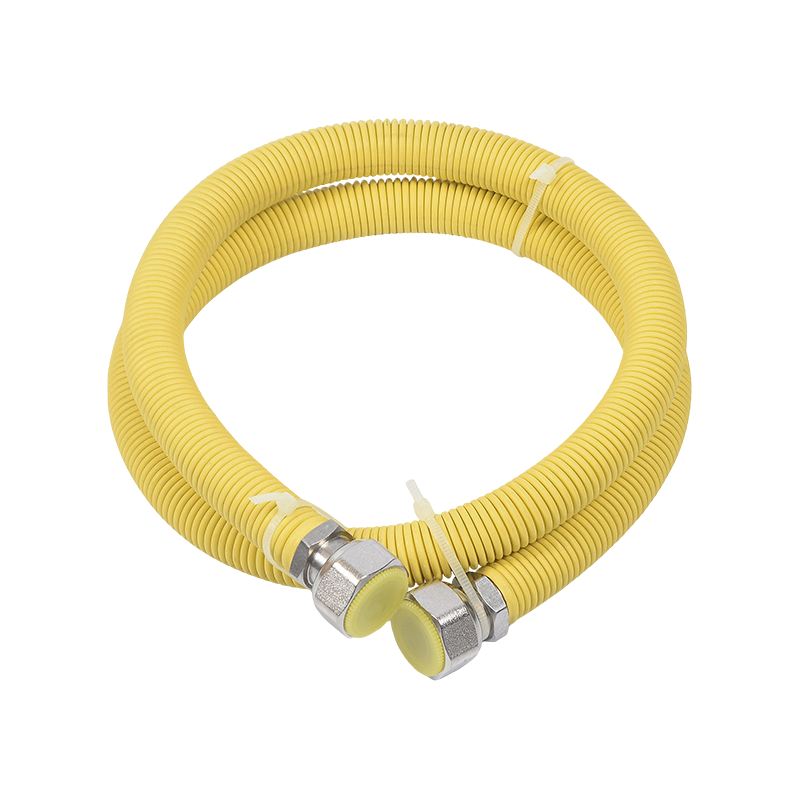
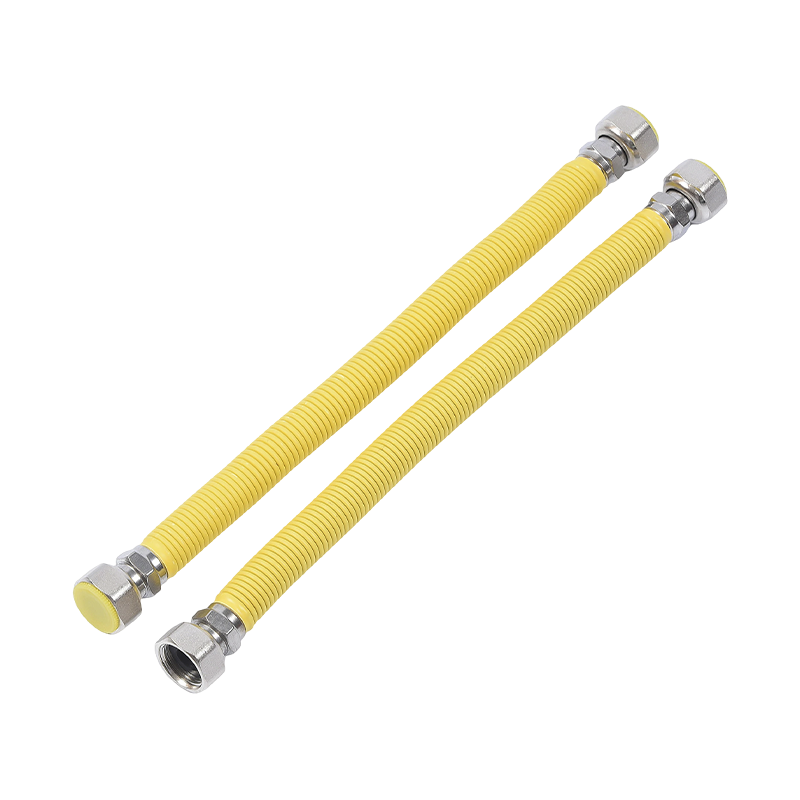
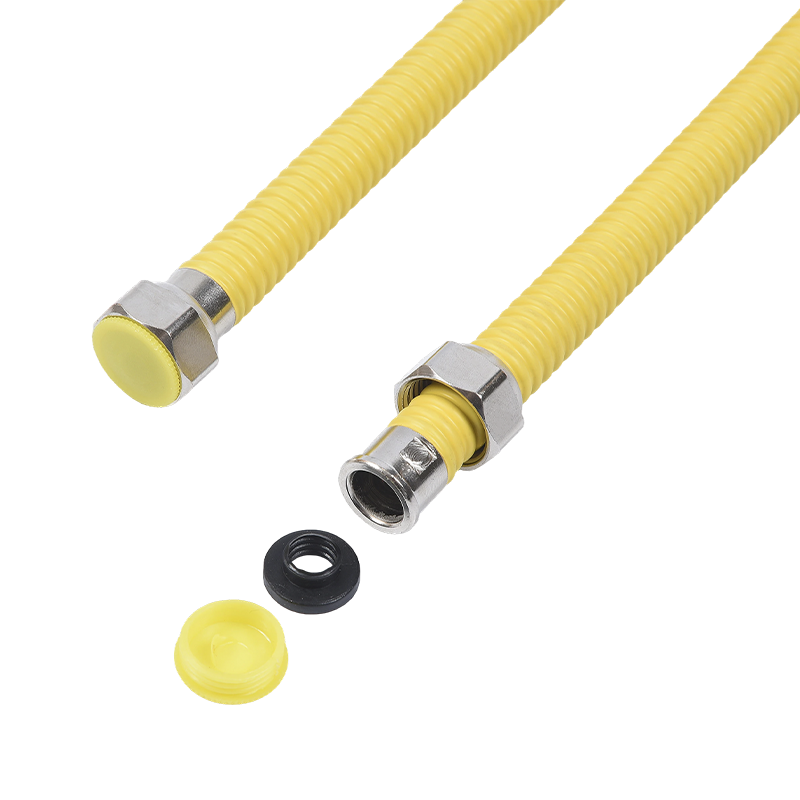
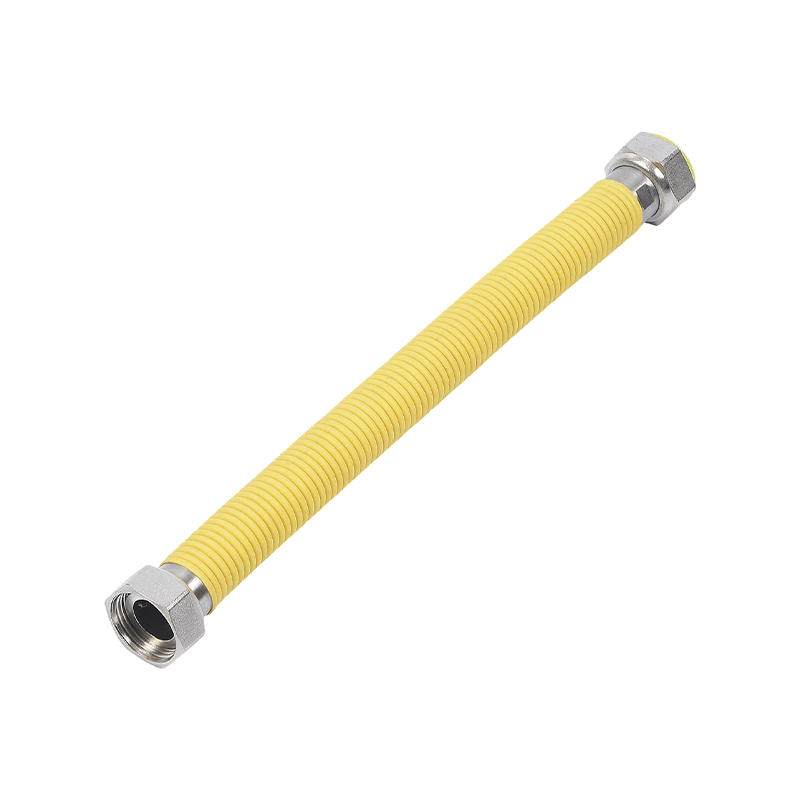
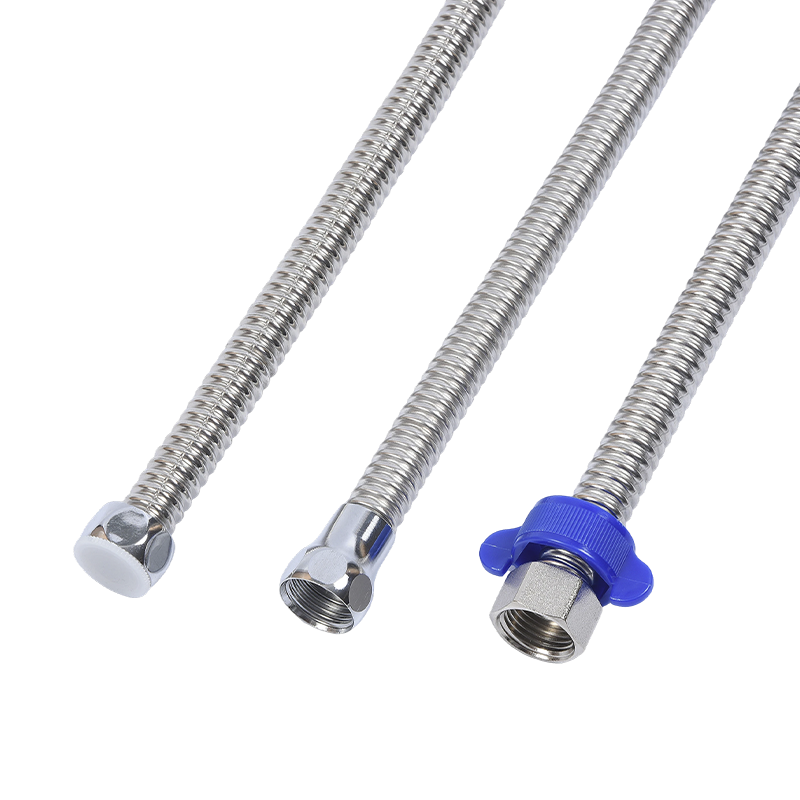
The mechanical flare fitting is a widely utilized connection methodology for joining a Gas Corrugated Hose to a rigid utility infrastructure. This system relies on a precision-machined 45-degree or 37-degree conical mating surface on the male adapter that aligns with a corresponding flared or integrated seat on the hose termination nut. As the installer tightens the threaded assembly, the axial force compresses the matching metal faces directly against each other, creating a high-pressure metal-to-metal seal without requiring auxiliary elastomeric gaskets. To achieve the required geometric tolerances for this connection type, production facilities utilize automated cold beam manufacturing and integrated research and development configurations to ensure that the angles of the machined sealing seat remain perfectly consistent, preventing microscopic gaps that could allow gas molecules to migrate through the thread interface.
Threaded NPT and ISO Tapered Connections with Anaerobic Sealants
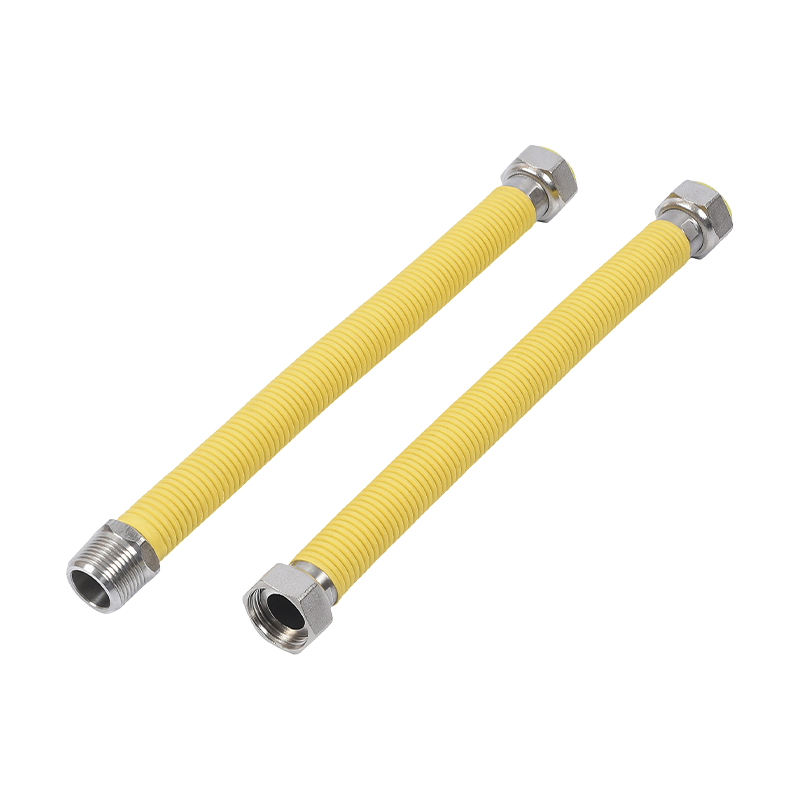
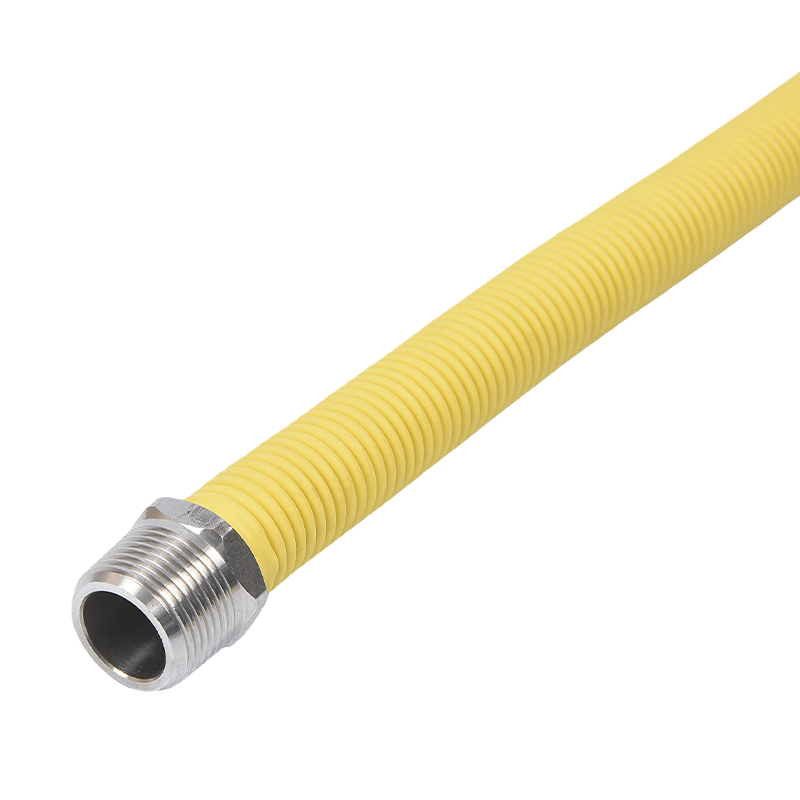
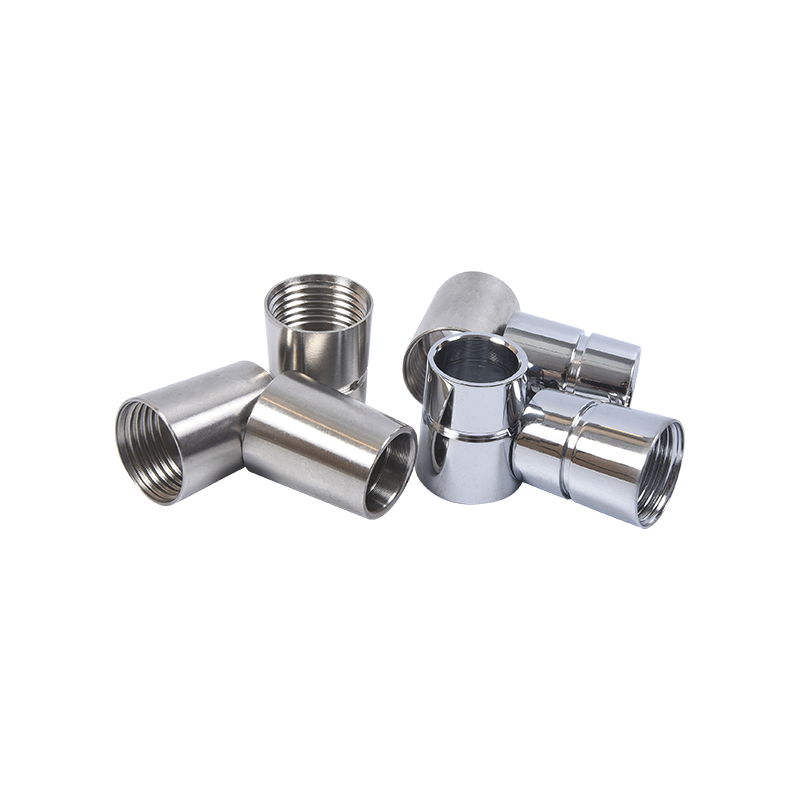
National Pipe Thread (NPT) and ISO tapered thread configurations are standard connection methods where the sealing mechanism is achieved via the physical interference and deformation of the mating threads themselves. The male and female threads are cut at a precise taper, meaning that as the connection is turned and drawn together, the structural clearance between the roots and crests of the threads decreases until a mechanical lock is achieved. In gas corrugated hose applications, these tapered terminations are integrated directly onto the solid end-fittings using automated laser automatic welding lines to fuse the fitting cleanly to the corrugated tube. Because minor micro-voids can still exist along the spiraled thread path, these connections are designed to be paired with specified PTFE tape or anaerobic pipe dopes to fill the thread tolerances and establish a complete gas barrier.
Integrated O-Ring Face Seal (ORFS) Connections for High-Vibration Systems
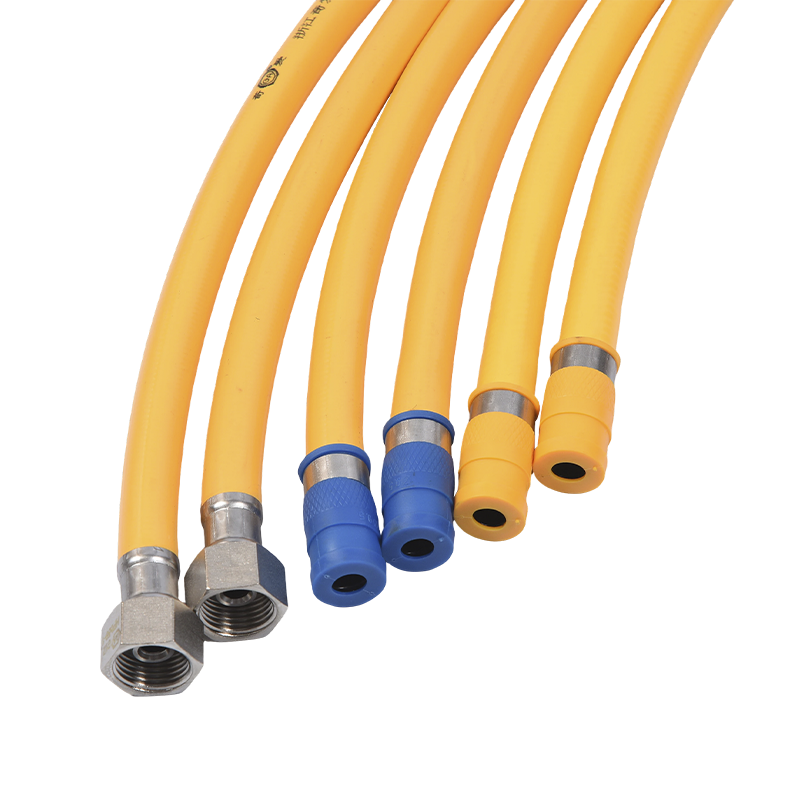
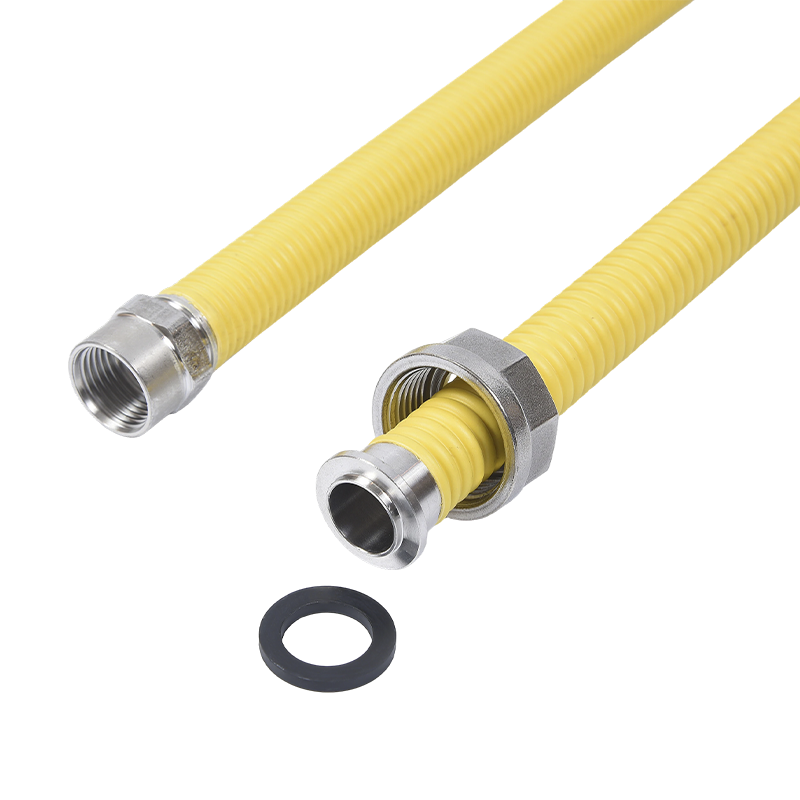
For gas appliances that integrate internal dynamic components or are subject to external building movements—such as commercial laundry units or industrial heating matrixes—traditional metal-to-metal seats can experience minor shifting that compromises the seal over extended periods. O-Ring Face Seal (ORFS) connections resolve this issue by incorporating a machined groove on the flat face of the forward fitting, which captures a synthetic elastomeric O-ring, typically composed of high-density Nitrile or Viton. When the retaining nut is torqued, the elastomeric ring is compressed against the flat mating surface of the receiving manifold, creating a highly localized sealing barrier. The elasticity of the O-ring allows it to continuously adapt to structural micro-vibrations and thermal expansion cycles without loosening or suffering from mechanical fatigue.
Technical Matrix of Connection End Configurations
Selecting the correct termination fitting depends on the specific operational environment, the local plumbing codes, and the pressure profile of the gas system. The table below outlines the core structural mechanics, typical application zones, and sealing mechanisms for standard connection options.
| Connection Type |
Primary Sealing Mechanism |
Vibration Resistance Level |
Recommended System Environment |
| Mechanical Flare Connection |
Metal-to-metal compression along matching conical angles |
Moderate; requires precise initial torque configuration |
Standard residential appliance hooks and meter connections |
| Tapered Thread (NPT / ISO) |
Thread interference and structural root-and-crest deformation |
Low to Moderate; relies on supplemental thread sealant compounds |
Fixed manifold distribution points and rigid line integration |
| O-Ring Face Seal (ORFS) |
Elastomeric compression inside a machined retaining groove |
High; elastomeric elasticity dampens external physical movement |
Commercial machinery hookups and high-vibration environments |
| Quick-Disconnect Couplings |
Internal spring-loaded dual shut-off valves with dual O-rings |
Moderate; features internal floating locking detents |
Mobile outdoor gas appliances and seasonal heating networks |
Quick-Disconnect Couplings with Integrated Safety Shut-Off Valves
In applications where gas appliances must be moved frequently for maintenance, cleaning, or seasonal storage—such as commercial kitchen ranges or outdoor patio heating setups—quick-disconnect couplings provide a highly functional termination method. These systems consist of a spring-loaded male plug and a corresponding female socket containing an internal sleeve mechanism. When connected, the internal valves push against each other to open the gas flow path. When uncoupled, the internal springs immediately force the internal valves closed, preventing gas escape even if the main upstream supply valve remains open. The sealing integrity within these quick-disconnect configurations relies on multiple internal backup O-rings that undergo comprehensive ultrasonic cleaning during factory production to prevent airborne particulates from interfering with the valve seat closure.
Post-Assembly Cleaning and Leak Verification Protocols
Regardless of the connection end option chosen, the physical interface where the solid end-fitting joins the flexible corrugated body must undergo continuous verification during the manufacturing process. Automated laser welding stations fuse the components into a single unit, which is immediately subjected to differential pneumatic pressure testing or vacuum chamber testing to confirm structural soundness. Following these testing procedures, the completed assemblies pass through an intensive multi-stage ultrasonic cleaning system to strip away any residual machining fluids or carbon scale from the internal sealing seats. Keeping these mating surfaces free of microscopic debris ensures that when the connection is torqued in the field, the designed mechanical interfaces achieve full surface-to-surface contact to block gas bypass throughout the operational lifecycle of the hose.
FAQ
Q: How do the 25 active production lines support bulk municipal or large-scale project orders for your Gas Corrugated Hose?
A: Operating 25 dedicated production lines provides a stable and high-volume output capacity across a 17-acre facility. This extensive machine network allows the factory to run continuous shifts for high-demand municipal contracts or massive commercial projects without disrupting small-batch OEM orders running concurrently.
Q: What specific mechanical advantage does cold beam manufacturing provide to a flexible Gas Corrugated Hose?
A: Cold beam manufacturing ensures that the stainless steel strip maintains absolute geometric straightness and structural integrity before entering the corrugation and welding blocks. This level of precise alignment prevents micro-torsion or uneven wall thickness along the hose body, creating uniform wave crests that distribute internal pressure evenly.
Q: How does the light reflame or bright annealing heat treatment affect the long-term flexibility of gas hoses installed in confined building structures?
A: When a gas hose is bent through tight structural voids or building frameworks, it must not become brittle or spring backward. The bright annealing heat treatment alters the grain boundaries of the stainless steel after mechanical shaping, restoring a high level of ductility that allows installers to route the hose through complex pathways without cracking the metal walls.
Q: Can your research and development team design a specialized inner corrugation pattern for unique OEM gas appliance connections?
A: Yes, backed by a complete and experienced research and development division, the factory can modify core parameters such as wave height, pitch width, and material thickness. These custom geometric settings are precisely mapped onto the production equipment to meet specific performance profiles, internal flow rates, and flexing thresholds requested by OEM clients.
Q: Why is ultrasonic cleaning used to treat the gas corrugated hoses instead of standard industrial water washing?
A: Standard water washes cannot reach inside the tight folds of a corrugated geometry to dissolve heavy processing oils. The ultrasonic cleaning system utilizes acoustic cavitation waves in a fluid bath, which implode on the metal surface to completely lift away fine metallic scale, dust, and industrial lubricants, ensuring the interior is clean for volatile gas media.
Q: How does the integrated steel belt division contribute to the safety profile of the longitudinal weld seam on the hose?
A: The on-site steel belt division slices raw steel rolls to precise width requirements with highly clean, burr-free edges. This high precision ensures that when the edges are brought together for longitudinal laser automatic welding, the resulting seam is smooth, deeply fused, and completely free of the micro-porosities or structural gaps that could cause minor leaks.


 English
 русский
 عربى
عربى
 +86-15867355556