Industry News
Content
Stainless steel gas pipes are corrosion-resistant piping systems used to transport natural gas, propane, and other fuel gases, available primarily in two forms: rigid stainless steel pipe and Corrugated Stainless Steel Tubing (CSST). Rigid pipe is typically used in commercial and industrial settings requiring high pressure ratings and permanent installation, while CSST has become the dominant choice for residential gas piping due to its flexibility, faster installation, and superior performance in seismic zones. Selection ultimately depends on application, required pressure rating, local building codes, and installation environment.
The sections below cover the main types available, how to select the right grade and size, applicable codes, and practical buying considerations.
Rigid stainless steel pipe is manufactured to standard pipe schedules (Schedule 10, 40, or 80) and joined using threaded, welded, or flanged connections. It offers the highest pressure ratings among gas piping options, often exceeding 1,000 PSI depending on schedule and diameter, making it the standard choice for industrial process piping, high-pressure distribution lines, and commercial facilities with demanding throughput requirements.
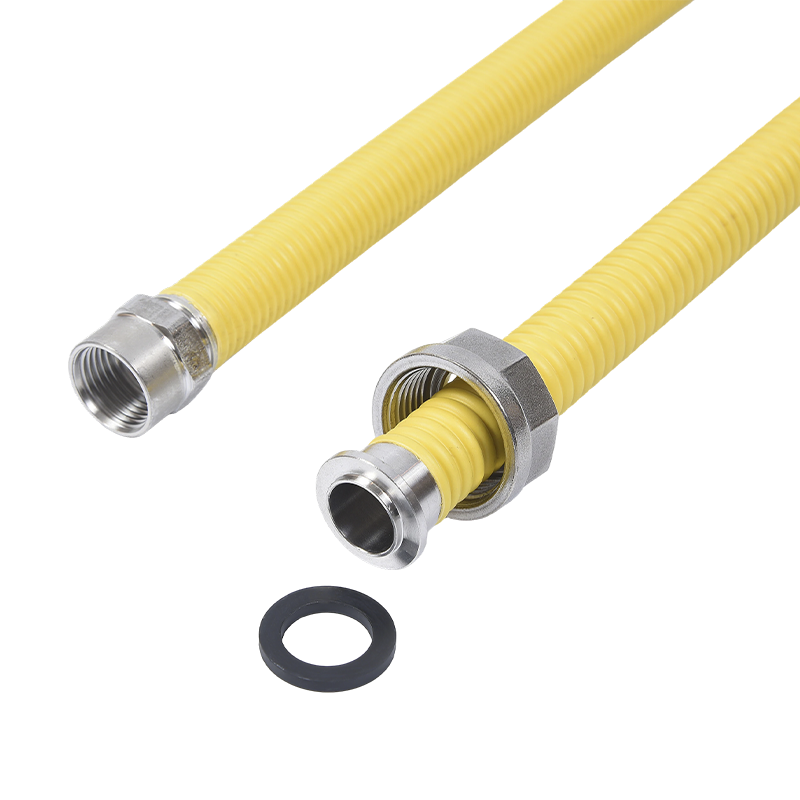
CSST is a flexible, corrugated tubing product typically covered in a yellow or black polymer jacket for protection and identification. Its flexibility allows installers to route it through walls, ceilings, and tight spaces with significantly fewer fittings than rigid pipe, often reducing installation time by 50% or more compared to traditional black iron or rigid stainless steel piping.
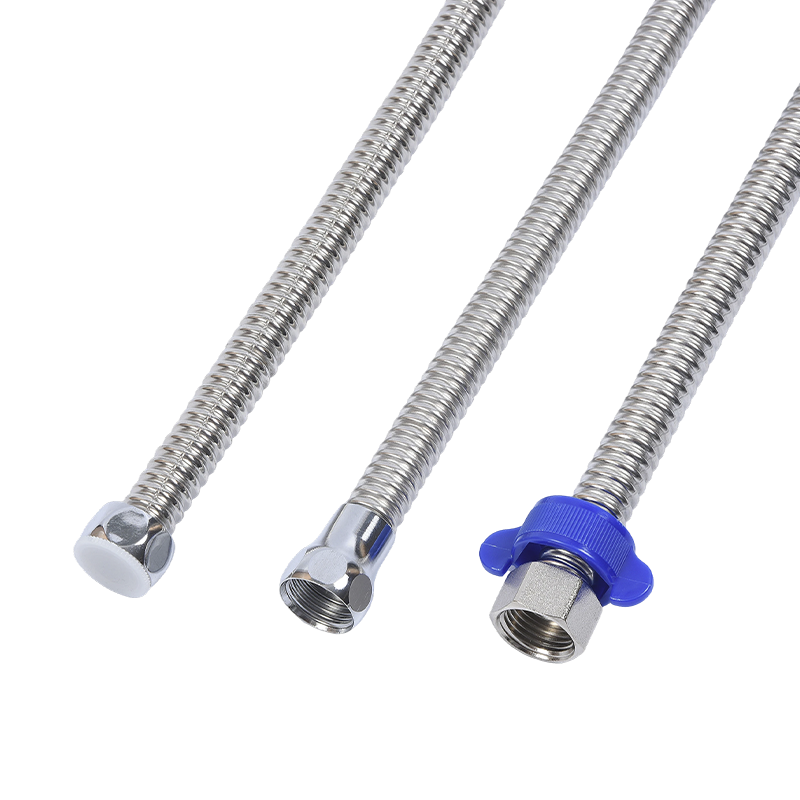
Used for short connections—typically between a fixed gas line and an appliance—these connectors feature a corrugated stainless steel core wrapped in a braided stainless steel sheath. They accommodate minor vibration and thermal movement, making them standard for connecting ranges, water heaters, and other movable or vibrating appliances.
| Feature | Rigid Stainless Steel Pipe | CSST |
|---|---|---|
| Installation speed | Slower, requires threading/welding | Fast, flexible routing |
| Typical pressure rating | Up to 1,000+ PSI | Up to 25 PSI (residential), higher for commercial-grade |
| Seismic performance | Rigid, prone to joint failure in movement | Flexes with structural movement |
| Bonding/grounding requirement | Not typically required | Required per manufacturer and code |
| Best suited for | Industrial, high-pressure commercial systems | Residential and light commercial installations |
CSST's ability to flex without fracturing makes it significantly more resistant to damage during seismic events compared to rigid pipe, which is why it has become the preferred choice for residential gas installation in many earthquake-prone regions.
The stainless steel grade used affects both cost and long-term corrosion resistance, particularly in environments exposed to moisture or chemical contact.
For most standard indoor residential applications, 304-grade CSST is sufficient, but installations near coastlines or in high-humidity industrial settings often justify the additional cost of 316-grade material to prevent long-term pitting corrosion.
Correct sizing depends on total gas demand (measured in BTUs), pipe length, and the number of fittings or bends in the run. Undersized piping causes insufficient gas pressure at appliances, particularly when multiple appliances operate simultaneously.
| CSST Size | Approximate BTU Capacity* | Typical Use |
|---|---|---|
| 3/8" | Up to 75,000 BTU | Single appliance branch lines |
| 1/2" | Up to 150,000 BTU | Water heaters, furnaces |
| 3/4" | Up to 300,000 BTU | Main trunk lines, multiple appliances |
| 1" | Up to 500,000+ BTU | Whole-house supply, commercial branch lines |
*Actual capacity varies by manufacturer, pipe length, and pressure drop allowance. Always consult manufacturer sizing charts or a licensed professional rather than relying on general estimates, since sizing errors are a leading cause of appliance performance issues.
Stainless steel gas piping installation is governed by codes that vary by region but generally reference standards such as NFPA 54 (National Fuel Gas Code) in the United States. Key requirements typically include:
Proper bonding is one of the most critical and frequently overlooked steps in CSST installation—inadequate bonding has historically been linked to pipe damage during nearby lightning strikes, which is why most current code editions mandate direct bonding to the electrical service grounding system.
Stainless steel gas pipes are used across a wide range of residential, commercial, and industrial settings:
Before purchasing stainless steel gas pipe or CSST for a project, verify the following:
Mixing fittings or components from different CSST manufacturers is generally not permitted, even if they appear physically compatible, since each system is engineered and certified as a complete assembly. Always source fittings from the same manufacturer as the tubing itself.
Constructed with a spiral corrugation design, this tube boasts remarkable resistance to corrosion, pressure, and mechanical forces. The intricate spiral structure not only adds strength but also ensur...
See Details
The stainless steel bathroom basin water heater pipe is a critical component designed to efficiently and safely deliver hot water to bathroom basins. It's primarily used in residential and commercial ...
See Details
The primary function of a stainless steel female thread straight connector is to connect two externally threaded components or fittings, enabling efficient fluid transfer within a piping system. It fe...
See DetailsStainless steel gas pipes are the preferred choice for transporting natural gas, propane, and other...
READ MOREQuick Answer: What to Know Before Buying a Stainless Steel Faucet The best stainless steel faucets ...
READ MOREWhich Stainless Steel Gas Pipe Should You Choose? For the majority of residential and light commerc...
READ MOREQuick Answer: What to Know Before Installing Stainless Steel Gas Pipe Stainless steel gas piping — ...
READ MORECopyright © Yuyao Boli Pipe Industry Ltd. All Rights Reserved