
Industry News
Content
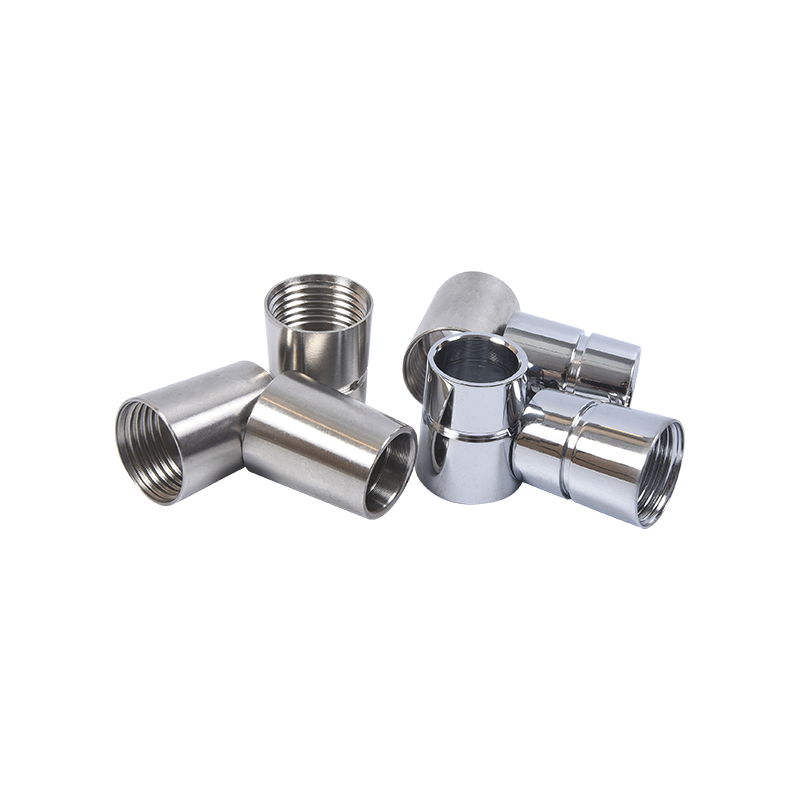
Stainless steel pipe fittings are standardized components—such as elbows, tees, reducers, and couplings—used to connect, redirect, branch, or terminate sections of pipe in a piping system. They are manufactured to precise dimensional standards (typically ASME B16.9 or B16.11) and are available in threaded, socket weld, and butt weld configurations to suit different pressure ratings and applications. Made primarily from 304 or 316 stainless steel, these fittings provide corrosion resistance, high-temperature stability, and long service life, making them the standard choice across oil and gas, chemical processing, food production, and marine industries.
The sections below break down the main fitting types, connection methods, material grades, sizing standards, and practical buying guidance.
Pipe fittings are categorized by function—each shape serves a specific purpose in directing or modifying flow within a system.
| Fitting Type | Function |
|---|---|
| Elbow (45° or 90°) | Changes the direction of pipe flow |
| Tee | Creates a branch connection off the main line |
| Reducer | Connects pipes of different diameters |
| Coupling | Joins two pipes of the same diameter in a straight run |
| Cap | Seals the end of a pipe |
| Union | Allows disconnection of pipe sections without cutting |
| Cross | Connects four pipe segments at a single junction |
Tees and elbows account for the majority of fittings used in a typical industrial piping system, since most layouts require frequent directional changes and branch connections to route piping around equipment and structural obstacles.
Threaded fittings use NPT (National Pipe Thread) connections and are typically used for smaller pipe sizes, generally 2 inches and under. They offer the easiest installation and disassembly but are not recommended for high-pressure or high-vibration applications, since thread engagement can loosen over time under cyclic stress.
Socket weld fittings have a recessed socket into which the pipe is inserted before welding around the joint's circumference. This design provides a stronger, more leak-resistant connection than threading, making it a common choice for small-to-medium diameter, high-pressure piping in the 2-inch and under range.
Butt weld fittings are welded directly end-to-end with the pipe, with both edges beveled to allow for full penetration welding. This method is standard for larger diameter, high-pressure, and high-temperature piping systems, offering the strongest and most reliable joint of the three connection types, though it requires skilled welding and is not easily disassembled.
| Connection Type | Typical Size Range | Pressure Suitability | Disassembly |
|---|---|---|---|
| Threaded | Up to 2" | Low to moderate | Easy |
| Socket weld | Up to 2"-4" | High | Difficult |
| Butt weld | 1/2" and up, including large diameters | Very high | Not designed for disassembly |
Manufacturing method also affects fitting performance, particularly for threaded and socket weld types.
Grade selection significantly impacts both cost and corrosion performance in demanding environments.
| Grade | Key Alloying Element | Best For |
|---|---|---|
| 304 | 18% chromium, 8% nickel | General industrial use, food processing, freshwater systems |
| 316 | Adds 2-3% molybdenum | Chemical processing, marine, offshore, chloride-rich environments |
The molybdenum content in 316 stainless steel significantly improves resistance to pitting and crevice corrosion caused by chlorides, which is why it's the standard specification for fittings used in seawater exposure, saline processing environments, and coastal industrial facilities, despite typically costing 20-30% more than 304-grade equivalents.
Stainless steel pipe fittings are manufactured to specific dimensional and pressure standards to ensure compatibility across manufacturers. The most widely referenced include:
Fitting wall thickness is specified by schedule number—Schedule 10S and 40S are the most common for stainless steel systems, with higher schedule numbers indicating thicker walls and greater pressure capacity. Matching fitting schedule to the connecting pipe's schedule is essential for a properly aligned, code-compliant joint.
Stainless steel pipe fittings are used across a wide range of industries, each with distinct performance priorities:
Before purchasing stainless steel pipe fittings for a project, confirm the following details against your system requirements:
For critical or regulated applications, always request mill test reports (MTRs) that verify chemical composition and mechanical properties, since this documentation provides traceability and confirms the fittings meet the specified material standard before installation.
Constructed with a spiral corrugation design, this tube boasts remarkable resistance to corrosion, pressure, and mechanical forces. The intricate spiral structure not only adds strength but also ensur...
See Details
The stainless steel bathroom basin water heater pipe is a critical component designed to efficiently and safely deliver hot water to bathroom basins. It's primarily used in residential and commercial ...
See Details
The primary function of a stainless steel female thread straight connector is to connect two externally threaded components or fittings, enabling efficient fluid transfer within a piping system. It fe...
See DetailsQuick Answer: Choosing the Right Stainless Steel Gas Pipe Stainless steel gas pipes are corrosion-r...
READ MOREStainless steel gas pipes are the preferred choice for transporting natural gas, propane, and other...
READ MOREQuick Answer: What to Know Before Installing Stainless Steel Gas Pipe Stainless steel gas piping — ...
READ MOREWhich Stainless Steel Gas Pipe Should You Choose? For the majority of residential and light commerc...
READ MORECopyright © Yuyao Boli Pipe Industry Ltd. All Rights Reserved
