

 English
 русский
 عربى
Industry News
Home / News / Industry News / Corrosion of Stainless Steel Welds: Causes, Prevention and Joint Design Tips


Content
Two months after a batch of 304 stainless steel bellows were installed in a coastal hotel, small brown spots appeared along the weld seams. The base metal still looked clean. The supplier insisted the material was genuine 304, and a laboratory test agreed. The problem was not the alloy grade. The weld heat input and the absence of post-weld passivation had created the corrosion condition. The good news is that weld corrosion can be controlled before a batch leaves the factory. You only need to know which mechanisms are at play and what to specify.
A weld is not just a mechanical joint. It is a thermal event that changes the microstructure of a stainless steel part over a narrow band. Three effects make that band the most likely place for corrosion to start.
When the base metal reaches roughly 450–850°C during welding, chromium and carbon can combine into chromium carbides along grain boundaries. The area immediately beside the weld, known as the heat-affected zone (HAZ), can become depleted of the chromium that normally forms the protective oxide film. This condition is called sensitization. Type 304 stainless steel is more prone to this than 316 or 316L, because molybdenum adds resistance and the extra-low-carbon grade limits carbide precipitation.
Welding heat oxidizes the surface. The colored scale that appears near the weld is not harmless: it sits above a chromium-depleted zone where the passive film has been degraded. Unless that scale is removed, the surface cannot repassivate fully, and a local corrosion cell can form under the oxide.
Rapid heating and cooling leave residual tensile stress concentrated around the weld. When a chlorine-rich environment is present, this stress creates an additional risk. Stress corrosion cracking can develop as fine branches, sometimes without heavy visible rust, which makes it especially dangerous in gas or water systems. The safety record of corrugated stainless steel tubing, including how welding and corrosion control affect it, is covered in our article on CSST safety considerations.
Field failures rarely appear all at once. They usually begin with one mechanism that creates a roughness, then a second mechanism takes over. The table below maps the typical mechanisms to their causes and practical controls.
| Mechanism | Typical Trigger | Visible Sign | Main Preventative Action |
|---|---|---|---|
| Pitting corrosion | Local breakdown of passive film by chlorides | Small pits with rust halo | Use 316/316L, smooth surface, passivate |
| Crevice corrosion | Stagnant electrolyte in gaps on the weld or under scale | Rust inside crevice | Avoid gaps, remove scale, mechanical cleaning |
| Intergranular corrosion | Sensitized grain boundaries in HAZ | Mesh-like cracking near weld | Use L grades, solution annealing |
| Stress corrosion cracking | Tensile stress plus chloride plus temperature | Branched cracks | Reduce residual stress, use duplex or controlled PWHT |
Pitting is the most visible starting point in chloride-bearing water. It can deepen into a crevice if scale or dirt creates a gap. Intergranular corrosion is the classic result of sensitization, and stress corrosion cracking is the mechanism that causes sudden leaks when the other two have already weakened the wall. In our own factory, we treat all four as welding quality indicators, not as separate material issues.
Alloy selection alone is not enough. A weld that is not cleaned and passivated will still corrode much faster than the same base metal with a properly restored surface. The standard sequence is mechanical cleaning, pickling, and passivation.
For corrugated stainless steel tubes, the wrinkle geometry makes scale removal harder than on a flat sheet. Our production lines use automated cleaning and pickling baths so the treatment reaches the full internal and external surface, not only the areas accessible to a wire brush.
The best way to reduce weld corrosion risk is to match the alloy and the part geometry to the actual installation environment. A general-purpose 304 bellows can serve dry indoor water or gas lines, but coastal air, swimming pools, and industrial kitchens push chloride levels up. In those cases, 316L is the safer choice.
For a kitchen gas appliance connection, the hose is exposed to steam, cleaning agents, and local humidity. A 316L corrugated flexible natural gas hose with a protective cover offers both corrosion resistance and mechanical protection. This is why we recommend a higher molybdenum grade when the installation site is near the sea or in a high-humidity foodservice area.
 316L Corrugated Flexible Natural Gas Hose for Kitchen UseThis 316L corrugated gas hose with stainless steel casing and rubber inner tube resists corrosion and mechanical stress, making it suitable for humid kitchen environments near the sea.View Product →
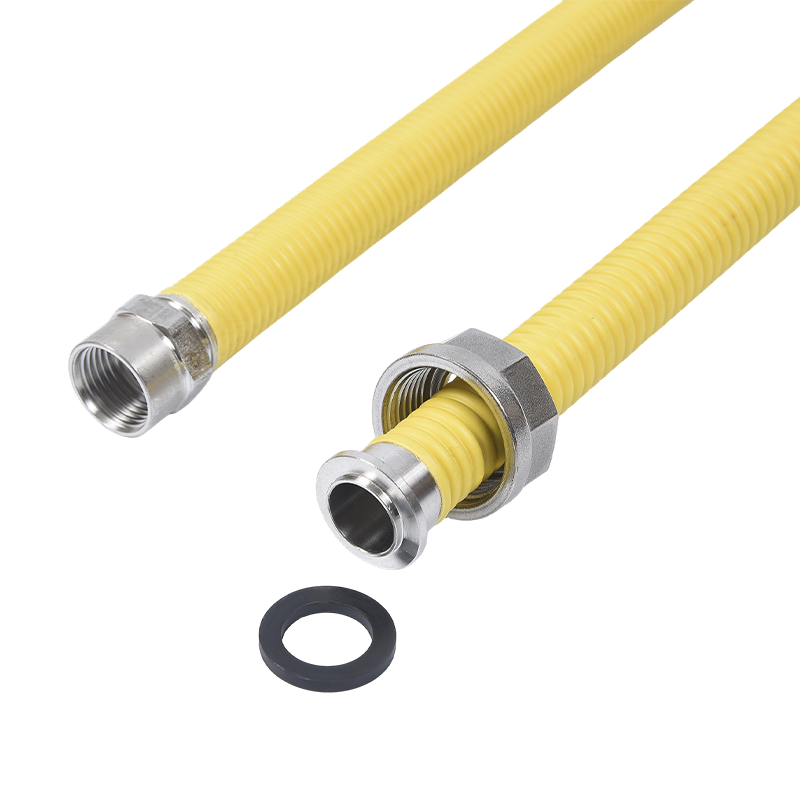
A bellows shape distributes movement and thermal expansion over many small convolutions instead of forcing the deformation into one short weld. The bellows wall itself needs to be sound, but the geometry reduces the local stress that can lead to stress corrosion cracking. When the application has a flame-retardant requirement, the outer covering should also be rated for flexing and heat. Our flame-retardant corrugated gas tube was designed for this combination, with a structure that keeps the stainless steel core protected and the outer layer stable under normal appliance movement.
Stainless Steel Corrugated Flame Retardant Hose for GasThis flame-retardant corrugated gas tube features a yellow PVC coating that resists fire, UV, and wear, providing safe and durable gas delivery in demanding applications.View Product →
Hot and cold water circuits introduce oxygen, temperature swings, and in some regions dissolved chloride. A leak in a water heater connection is not only a maintenance issue: it can damage the equipment below the point of failure. A proven way to protect the connection is to specify a flexible stainless steel link with a wrench-adjustable fitting and a full pickled and passivated surface. We manufacture the stainless steel corrugated pipe with wrench for that purpose, and it is a common choice for retrofit and OEM projects. Stainless steel bellows also offer a long service life that reduces the environmental burden of repeated replacements, as discussed in this overview of the environmental advantages of stainless steel bellows.
304 Stainless Steel Corrugated Pipe with WrenchThis 304 stainless steel corrugated pipe resists high temperatures and pressure, and the included wrench allows for easy installation and maintenance, ideal for hot water systems.View Product →Weld corrosion in stainless steel is a result of heat, surface condition, and environment working together. The practical answer for a buyer is not simply to ask for “stainless steel.” It is to specify the alloy grade, the weld treatment, and the surface finish, and to have the evidence in the inspection report. When those details are consistent, the service life of a stainless steel weld can meet the expectations set by the base metal.
If you are sourcing welded corrugated stainless steel pipe or gas hoses, ask the manufacturer about its pickling and passivation procedure and how it verifies the heat-affected zone. Those are the questions that prevent the brown spots from appearing months later.
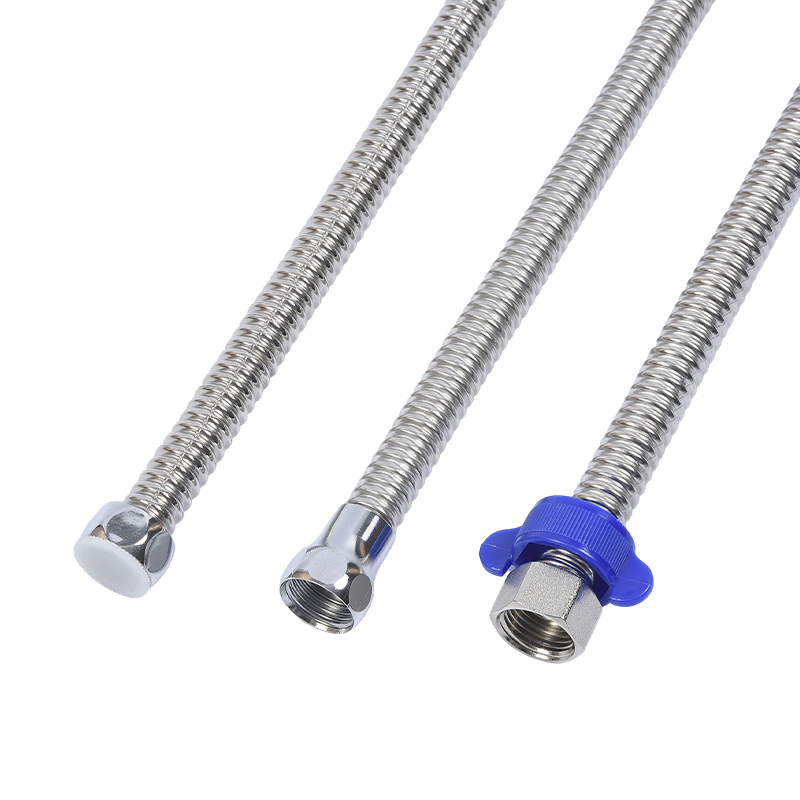

Constructed with a spiral corrugation design, this tube boasts remarkable resistance to corrosion, pressure, and mechanical forces. The intricate spiral structure not only adds strength but also ensur...
See Details
The stainless steel bathroom basin water heater pipe is a critical component designed to efficiently and safely deliver hot water to bathroom basins. It's primarily used in residential and commercial ...
See Details
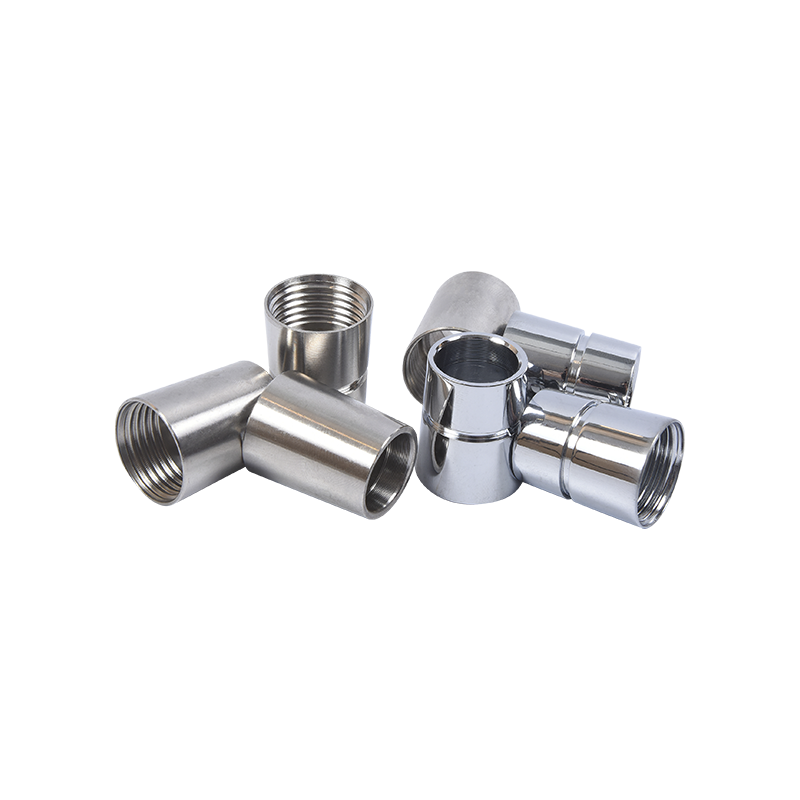
The primary function of a stainless steel female thread straight connector is to connect two externally threaded components or fittings, enabling efficient fluid transfer within a piping system. It fe...
See DetailsWhich Stainless Steel Gas Pipe Should You Choose? For the majority of residential and light commerc...
READ MOREWhen you source stainless steel pipe for gas or water connections, corrosion resistance is not an o...
READ MOREA building contractor unloads a batch of stainless steel corrugated pipes and notices orange-brown ...
READ MOREWhen a specification sheet for a stainless steel corrugated tube lists "1.4307" and you need to kno...
READ MORE
Copyright © Yuyao Boli Pipe Industry Ltd. All Rights Reserved

 ++86-15867355556